

Significant Cognitive Advantage (The Messenger Effect)

The Messenger Effect
Do you remember this guy?
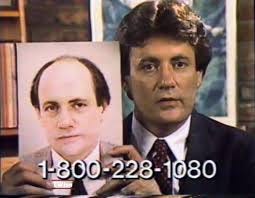
Well, I don’t. Because It was 1 years old when his commercial first aired. However, I do very well remember what line he’s famous for:
I’m not only the Hair Club President, but I’m also a client!
That I remember.
Sy Sperling was the spokesperson and face (head?) of the Hair Club for Men, and he didn’t pioneer being a TV pitchman, but his line about also being a client is seared into our collective memory. It was a good message, and it came from the best messanger — the dude that made the thing and used the thing to show that the thing worked.
That is the messager effect.
In behavioral economics, the messenger effect refers to the phenomenon where the perceived credibility, expertise, or likability of the person delivering information influences how the information is received, interpreted, and acted upon. This cognitive bias can affect decision-making by causing individuals to assign more weight or trust to information that is conveyed by messengers whom they perceive as authoritative, knowledgeable, or relatable, regardless of the actual content or quality of the information. (thebehavioralscientist)
The messanger effect is a cognitive bias we use to ignore objective facts. Not because we want to ignore facts, but because we don’t have enough hours in a day to objectively check out all of the facts… we need a shortcut so we can make decisions quickly so we can go about our daily day.
This effect shows up everywhere.
Celebrity endorsements
Imfluencers on Instagram
Unboxing gadgets by a tech journalist
9 out of 10 doctors recommmend brusing your teeth with bacon for breakfast…
Brands want the messanger to do the heavy lifting up front. That way you are half-sold before you start comparing ingredients or features or whatever product details we need to know.
When it works, it works
Obviously, the hair club guy nailed it.
Same thing for Nike with Air Jordans. We all wanted to Be Like Mike.
Kim Kardashian with Skims is a more recent example.
But even in our corner of the DTC Universe, we basically created an entire industry based on this cognitive bias — influencer marketing — not because we like working with vain assholes, but because it does work.
Customers see someone on Tik Tok use a product they are interested in, and they thing… Ok, this person is using it too, and they have built a large following, therefore must have a decent reputation, and therefore also has the trust of a brand, and so most likely this is a good product.
That’s how it works. But probably works subconsciously and all in about 3.3 nanoseconds.
Cognitive shortcuts are short. That’s their function.
When it doesn’t work…
Just because it can work doesn’t mean it always will.
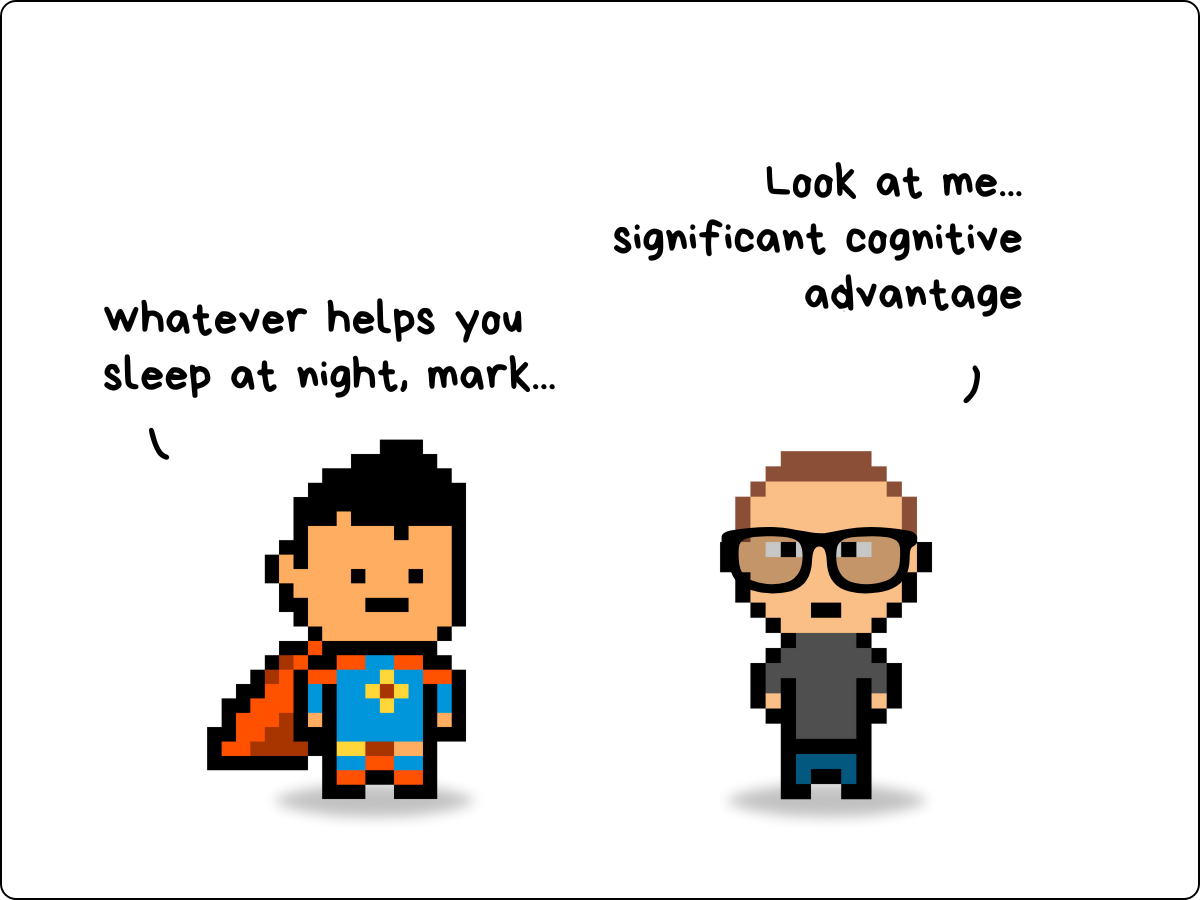
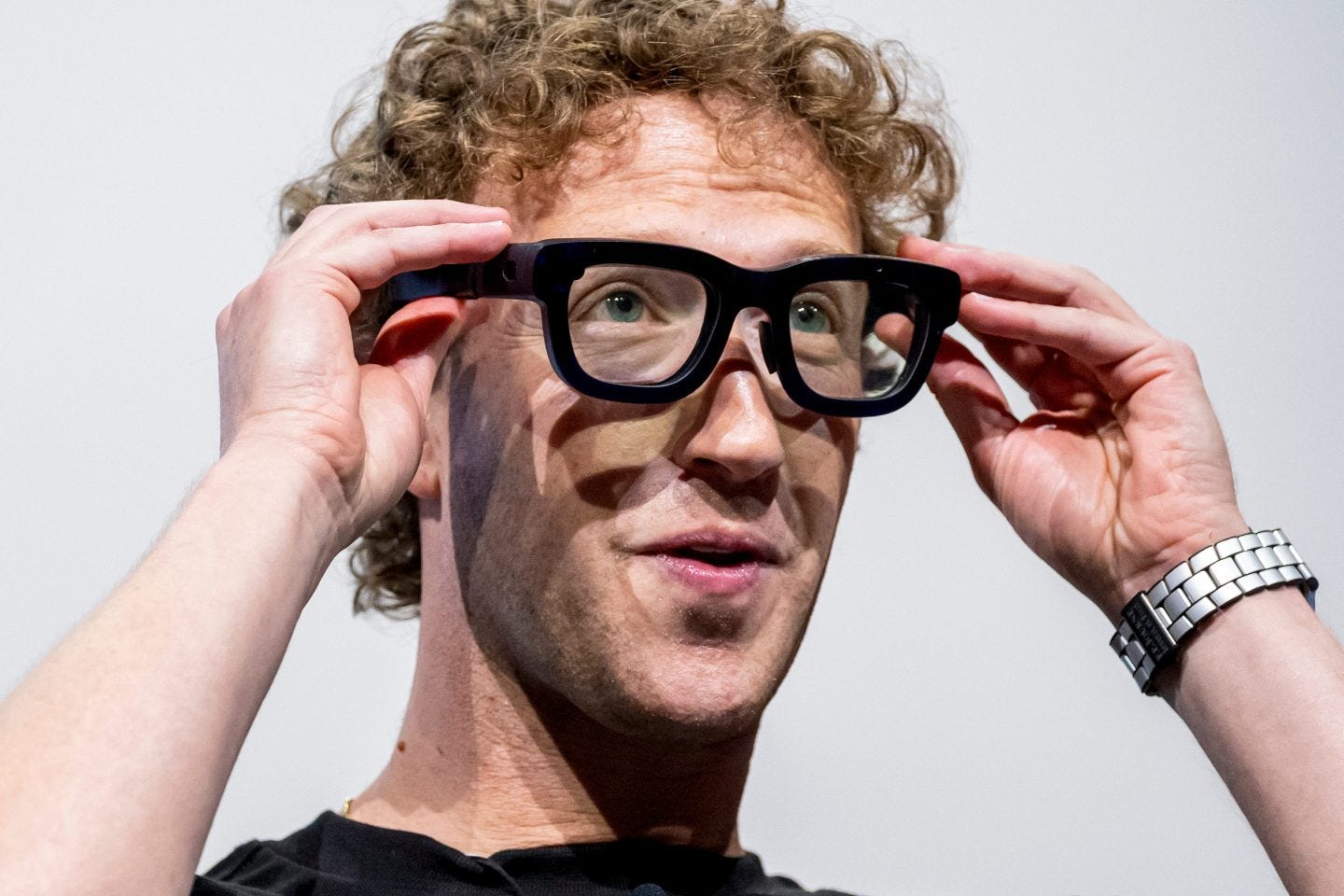
Mark Zuckerberg trying to make me feel like I’m less cool — or at a significant cognitive disadvantage — if I don’t wear his pos glasses doesn’t work.
I am fine never being as cool as him.
Making it work in ecommerce…
It’s not going to be the same for each brand, but some areas do see the messenger effect seep through.
Founders
Some brands have it easier than others. I have it easy because the brand I work at is kinda like The Hair Club — founder invented and uses the product. His name is synonomous with the podiatric treatment he developed, and the entire industry knows him. Making content with him or having his endorsement on a new launch is the messenger effect.
When we launched a new product that was similar to the original this summer, the same people who had the original just came back for the new one. Just because they wanted it, even though they don’t really need two.
I do want to say here that the founder’s story stuck on an about us page is pretty thin. They need to be on the product page or in content that people are consuming while they are interested in buying — not as a separate “story.”
Influencers
Influencers are the poor brand’s version of celebrity endoresments, and mostly are a waste of time and money. The tend to work solely on building influence for themselves rather than helping market products…. as in, they are more often using the brands to market themselves rather than the other way around.
But… if you find someone who actually matches your brand and product, find a way to partner with them and create new content that you can use in evergreen campaigns.
Don’t just pay for posts. I get that the idea is to pay them to distribute content, but it rarely works.
Reviews and/or Testimonials
These are standard, and super helpful. Happy customers as the messenger is social proof and more genuine than a paid partnership. But sometimes they are stuck down in a “reviews section” pasted in from a reviews app.
Break out some good reviews as testimonials. Plaster them on the homepage or social or wherever.
There are legal things that come with reviews. You have to show all reviews and cannot cherry pick the good ones. Suppressing bad reviews is a no-no… for good reason.
But testimonials are fair game — just label it correctly.
Final Thoughts
Ads are flying in our faces are all times and it becomes white noise because generic messages with generica phrases bring our generic apathy.
The Messenger Effect, if done right, can leapfrog a customer’s attention right to the type of mindset you want them to have when evaluating your product.
So it worth some consideration.
Share if you liked it.